

Have you ever struggled with self-trust, finding yourself second-guessing even the smallest decisions? Maybe you replay past choices, doubt your instincts, or feel disconnected from what you truly want. If you’ve experienced trauma, your sense of self may have been deeply shaken — but it’s absolutely possible to rebuild it.
In this post, we’ll explore what self-trust really means, how trauma can erode it, and how you can start rebuilding a more confident, compassionate relationship with yourself — one rooted in safety and integrity.
Understanding Self-Trust: The Heart of Healing
At its core, self-trust means believing that you can rely on yourself — your thoughts, feelings, and decisions. It’s the quiet confidence that you’ll act with care and honesty, even when life feels uncertain.
As the CPTSD Foundation explains, self-trust “means you have felt secure in the fact that you can rely on your integrity.” In other words, it’s about knowing that even when you make mistakes, you won’t turn against yourself.
When you trust yourself, you stop chasing validation and start honouring your own truth. That inner stability forms the foundation for emotional resilience and healthier relationships.
How Trauma Undermines Self-Trust
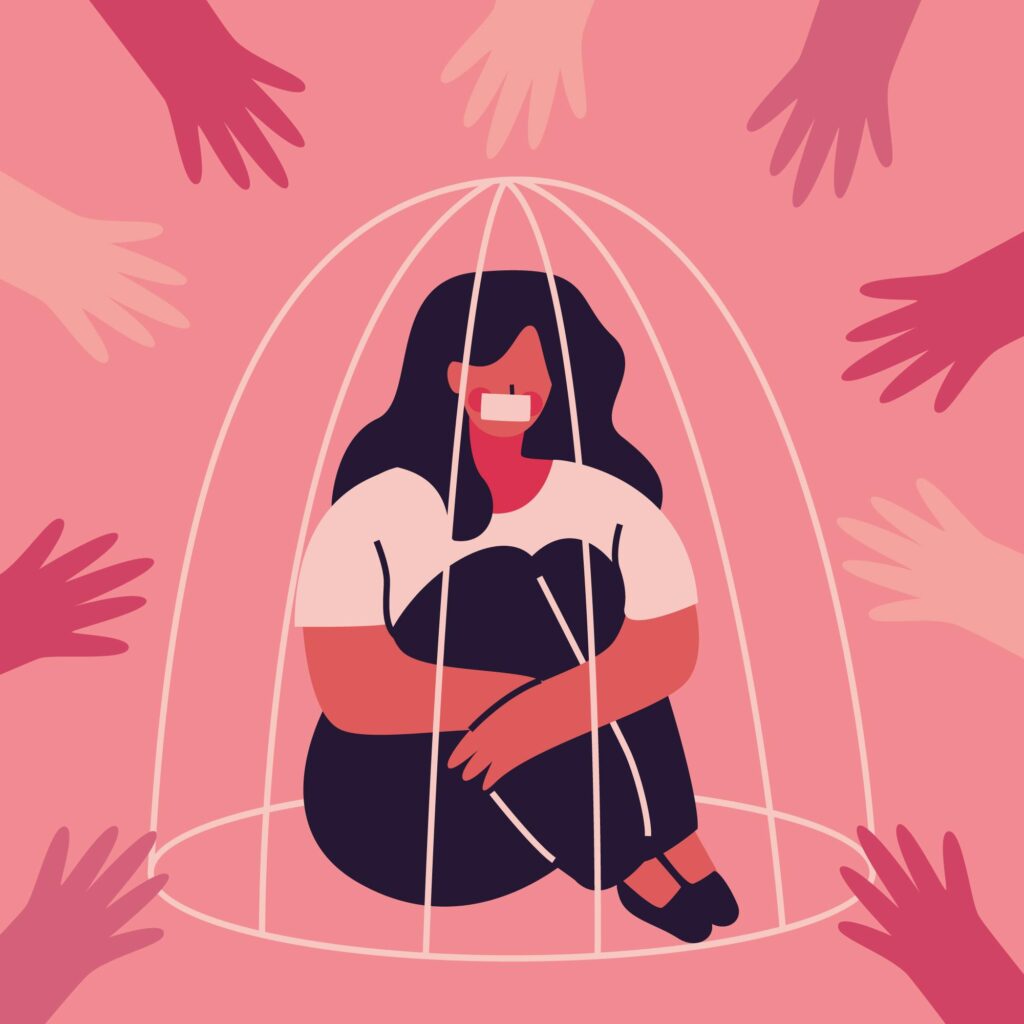
Trauma — especially relational or developmental trauma — can quietly damage self-trust. When your emotions, needs, or boundaries were ignored or invalidated, you learned that your inner signals weren’t safe to follow. Over time, that conditioning teaches you to doubt yourself.
Trauma often involves “having our perceptions, emotions, or passions invalidated when there is nothing wrong with them.” This kind of repeated invalidation can plant deep seeds of self-doubt and shame.
You might notice it showing up as:
- Constant second-guessing, even over small choices.
- Seeking reassurance before acting.
- Avoiding decisions out of fear of making the wrong one.
- Feeling numb or disconnected from your emotions or body.
These patterns aren’t personal failures — they’re survival responses. Your body and mind learned that staying uncertain was safer than risking rejection or pain. Healing self-trust means teaching your nervous system that it’s safe to listen to yourself again.
From Awareness to Action
Understanding how trauma affects self-trust is the first step — now it’s time to begin gently rebuilding it. Healing self-trust isn’t about forcing confidence or ignoring fear; it’s about creating small, consistent moments where you prove to yourself that you’re safe, capable, and worthy of your own belief. These next steps can help you start that process in an intentional and compassionate way.
Step 1: Rebuilding Self-Trust Through Safe Support
Before you can fully trust yourself, it helps to borrow trust from safe, supportive people. Thus, it’s crucial to find people or groups who can help us — we must borrow the eyes of those with clearer vision.
Therapy, peer support, or compassionate relationships can offer that “clearer vision.” When someone sees you with empathy instead of judgment, your body begins to learn a new truth: I can be seen and still be safe.
In Singapore, that might mean finding a trauma-informed therapist, joining a support group, or connecting with people who genuinely listen. Self-trust grows best in the soil of safety and connection.
Step 2: Listening to Your Inner World
Trauma often disconnects us from our bodies and emotions. To rebuild self-trust, you need to tune back in. Your feelings and sensations are not enemies — they’re messages about what you need.
Start gently:
- Spend five quiet minutes each day noticing your breath and asking, “What am I feeling right now?”
- When a need or emotion arises, pause and name it.
- Keep a small journal of moments when you honoured your feelings — even in small ways.
Every time you listen to yourself, you reinforce the message: My experience matters. This simple act restores self-trust at its most fundamental level.
Step 3: Strengthening Self-Trust Through Small, Daily Decisions
You don’t need to rebuild self-trust through big life changes. It starts with the little things and begins with simple choices: “What do you want for lunch? What do you want to wear today?”
These micro-decisions may seem small, but each one is a declaration: I can trust myself to choose. Over time, these moments add up, reshaping your internal narrative from “I don’t know what’s right for me” to “I can rely on my own judgment.”
If you’re rebuilding after trauma, start here — with the everyday moments that remind you that you have agency, and that your preferences matter.
Step 4: Tracking Evidence of Growing
Our minds need proof that change is real. One way to strengthen self-trust is to track it. Create a simple “trust log” — a notebook or phone note where you record examples of trusting yourself.
For example:
- “I said no when I was tired.”
- “I asked for help.”
- “I chose what felt right for me, even if others disagreed.”
Each piece of evidence weakens the old belief. Over time, your brain begins to realize: Maybe I really can trust myself. Seeing your growth written down helps you internalize it.
Step 5: Expanding Self-Trust with Boundaries and Courage
As self-trust grows, it will naturally show up in bigger decisions — setting boundaries, speaking your truth, or pursuing changes you once avoided.
The key is to move at your own pace. You don’t need to leap; you can take steady steps. Each time you choose alignment over fear, you prove that you can rely on yourself.
In a high-pressure culture like Singapore’s, this is transformative. Trusting yourself to rest, say no, or choose differently becomes a radical act of self-respect.
Step 6: Nurturing an Inner Voice
Your internal dialogue has immense power. Trauma often creates an inner critic that says, “You can’t handle this.” Rebuilding self-trust means replacing that voice with one that says, “You can learn through this.”
When you make a mistake, respond kindly: “I’m still learning.” When you feel doubt, remind yourself: “I can trust myself to try again.”
This compassionate self-talk doesn’t excuse behaviour — it empowers growth. It says, I trust myself to repair, to reflect, and to keep going. That’s the essence of lasting self-trust.

Why Rebuilding Self-Trust Matters in Adulthood
For adults in their late 20s to 50s, struggling with self-trust can quietly shape every area of life — from relationships to career decisions. You may appear confident on the outside but feel lost internally.
In Singapore, where success and stability are often prioritised, many adults override their emotions to “keep moving.” But without self-trust, even achievement can feel hollow.
Rebuilding self-trust helps you:
- Make decisions with confidence.
- Build secure, balanced relationships.
- Honour your boundaries and needs.
- Live more authentically, aligned with your values.
When you begin to trust yourself again, life feels less like performance and more like presence.
Simple Ways to Rebuild Self-Trust This Week
You can begin today with small, meaningful steps:
- Make one intentional choice — ask, “What do I really want right now?” and act on it.
- Pause for a body check-in — breathe, notice what feels tight or relaxed, and respond with care.
- Write one self-trust moment in your journal — even if it’s as simple as speaking your mind or resting when tired.
Small actions, done consistently, rebuild trust faster than grand resolutions.
Summary
Rebuilding self-trust after trauma isn’t about becoming fearless — it’s about becoming faithful to yourself. While “trust yourself” sounds simple, for trauma survivors, the process of becoming trustworthy is far more complex and gradual.
Each time you listen inward, choose what feels right, and treat yourself with compassion, you rewrite that old story of doubt and disconnection.
You learn, slowly and steadily:
“I am someone I can trust.”
That’s the quiet strength that carries true healing — not perfection, but presence, integrity, and self-respect.
You are always welcome to contact me to see if I might be able to support you as you journey forward.
[Photos credit: Freepik.com]