

Do you ever wonder why you procrastinate, and how childhood trauma might be involved?
In this post, we’ll explore how childhood trauma rewires the brain, how it links to chronic procrastination at work and in life, and – most importantly – how you can begin to break free.
Procrastination Isn’t Just a Habit – It Could Be a Response to Trauma
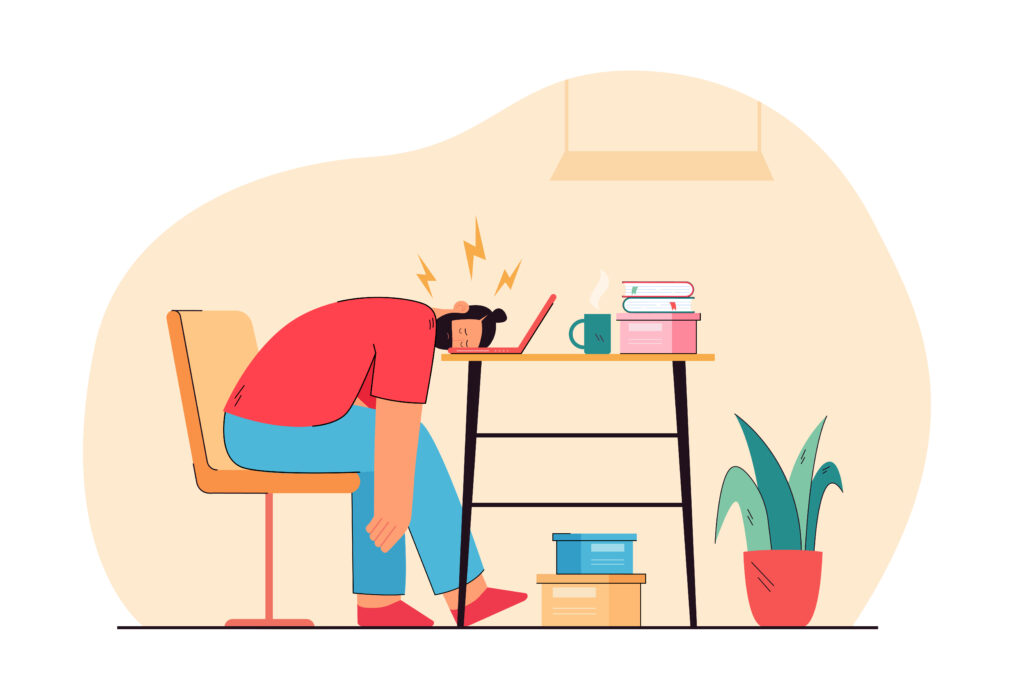
Imagine this: you’re sitting at your desk, fully aware of the deadlines creeping closer. But instead of starting your work, you’re suddenly vacuuming the floor. Or answering emails that could wait. Or scrolling endlessly. You know what needs to be done, but you just…can’t.
You tell yourself you’ll do it tomorrow. But tomorrow comes, and the cycle repeats. And with each delay, guilt and stress pile up like unopened mail.
If this sounds familiar, you’re not alone. Procrastination isn’t always about laziness or poor time management – it can be a deeply ingrained response to past trauma.
What Is Procrastination (Really)?
Most of us procrastinate at some point – especially when faced with unpleasant or overwhelming tasks. But chronic procrastination is different. It’s not just avoiding a boring chore. It’s putting things off again and again, even when it creates stress, jeopardizes your career, or affects your self-esteem.
Mainstream advice often tells us to “just do it,” or “get more disciplined.” But if you’ve experienced trauma, especially in childhood, those strategies can feel like climbing a mountain with no gear.
Why? Because your brain has been trained to survive, not thrive.
How Childhood Trauma Fuels Procrastination
When we grow up in environments where our emotional needs are unmet – where love feels conditional, failure is punished, or safety isn’t guaranteed – our nervous system adapts.
We stay on high alert, fear mistakes, and avoid uncertainty. Here’s how that plays out later in life:
- We fear failure, because failure used to come with consequences – shame, punishment, or rejection.
- We avoid starting tasks, because if we don’t begin, we can’t mess up.
- We struggle with uncertainty, because unpredictability felt unsafe in childhood.
- We crave control, because it was the only way to feel secure.
The result? We delay, distract, and procrastinate — not out of laziness, but as a way our nervous system tries to keep us safe.
“If you procrastinate, it’s not because you’re lazy. It’s because your body is in a threat state.” – Dr. Nicole LePera
Hypervigilance and Procrastination
Many trauma survivors experience hypervigilance – constantly scanning for danger, even in safe environments. At work, this might look like:
- Overthinking every decision
- Being afraid to speak up in meetings
- Getting easily overwhelmed by feedback
- Feeling mentally and physically drained by tasks others find manageable
When your brain is on high alert, starting or completing a task can feel unsafe, even if it’s just replying to an email. Procrastination becomes a coping mechanism – your body’s way of saying, “Let’s avoid more stress.”
Fear of Criticism and the Perfectionism Trap
Did you grow up hearing things like:
- “You can do better.”
- “Why did you do it like that?”
- “You should’ve known better.”
Over time, these messages can plant deep fears: fear of being wrong, fear of disappointing others, fear of not being good enough. In adulthood, this can show up as perfectionism, and with it, procrastination.
If nothing you do feels good enough, why even try?
You might also unknowingly engage in self-handicapping – delaying a task so that if you fail, you have an “excuse.” It’s a way of protecting your self-worth: “I didn’t fail because I’m not capable… I just didn’t have enough time.”
Why Mainstream Advice Doesn’t Always Help
“Push through.”
“Be more productive.”
“Just focus.”
These tips may work for someone with healthy emotional foundations, but not for someone whose nervous system is wired for survival.
For trauma survivors, procrastination is not discomfort – it’s fear. Often, it’s a deep emotional pain tied to rejection, failure, or abandonment.
You might not have been taught how to regulate your emotions, face disappointment, or ask for help. So even small tasks can feel emotionally overwhelming.
That’s why change doesn’t start with forcing productivity – it starts with awareness and self-compassion.
How to Start Overcoming Procrastination

The good news? The brain can change. Trauma-informed strategies can help you build resilience, regulate your nervous system, and move forward – one small step at a time.
1. Build Self-Compassion
Research shows that people who are kind to themselves are more likely to take action. When we treat ourselves with care instead of criticism, we create the emotional safety needed to move forward. Try:
- Take a moment to be still and breathe deeply
Ground yourself with slow, intentional breaths. This signals safety to your nervous system. - Acknowledge any strong emotions you may feel, but do not give in to them
You can notice anxiety, fear, or overwhelm without letting those feelings take control. - Pause before reacting to look for objective evidence in the situation
Is the task truly threatening, or does it just feel that way because of past experiences? - Set boundaries with others and with yourself
Protect your energy. It’s okay to say no, reschedule, or take breaks.
2. Recognize Your Avoidance Patterns
Make a list of your common “escape” activities – scrolling, snacking, over-researching.
Then, when you notice yourself reaching for one, pause and ask:
“What am I trying to avoid?”
Acknowledge the emotions that arise. Anxiety? Shame? Overwhelm? Sit with them for a moment instead of pushing them away.
3. Break Tasks into Smaller Steps
Instead of “Write the full report,” try:
- Outline the report
- Write the first paragraph
- Set a timer for 10 minutes
Celebrate even the smallest wins.
4. Know the Difference Between Safety and Comfort
You don’t need to feel comfortable to act – but you do need to feel safe.
Take steps that stretch you slightly – not scare you into freezing.
Instead of signing up to speak at a conference, try:
- Sharing your thoughts in a team meeting
- Posting a short video online
- Writing a blog post (like this!)
5. Reward Progress, Not Perfection
After completing a task, give yourself a healthy reward:
- Your favourite snack
- An episode of a show you enjoy
- A relaxing walk or bath
You’re reinforcing a new, positive habit loop.
When to Seek Support
If your procrastination feels overwhelming, and you suspect it’s rooted in childhood trauma, know this: you don’t have to figure it out alone.
Working with a trauma-informed therapist can help you explore the root causes of your procrastination and develop tools tailored to your unique nervous system and needs.
Therapies like Cognitive Behavioural Therapy (CBT) and Eye Movement Desensitization and Reprocessing Therapy (EMDR) can be especially helpful in addressing both thoughts and body responses linked to procrastination.
Summary
Procrastination is frustrating, yes – but it’s also a clue. A sign that something deeper is going on under the surface. Shame won’t help you change – but understanding and compassion will.
So the next time you find yourself stuck in the cycle of delay, remember:
You’re not lazy or broken — you’re doing the best you can with what you’ve learned to survive.
And now, you have new tools. Start small. Be gentle. And take one brave step forward.
You are always welcome to contact me to see if I might be able to support you as you journey forward.
[Photos credit: Freepik.com]